
Introduction
Climate change poses escalating risks to health systems and communities across Africa. Extreme heat, floods, droughts, severe storms, wildfires, and shifting disease patterns threaten infrastructure, disrupt service delivery, strain the health workforce, and exacerbate existing vulnerabilities. At the same time, the health sector plays a critical role in climate mitigation, adaptation, and resilience. By working collaboratively—health professionals, engineers, urban planners, industry leaders, and policymakers—Africa can build climate-resilient and environmentally sustainable health systems that reduce losses and damages from extreme events while lowering the environmental footprint of healthcare delivery. These solutions generate powerful co-benefits: improving access to care, strengthening patient safety and quality, reducing long-term operational costs, and aligning health systems with global climate and governance frameworks.
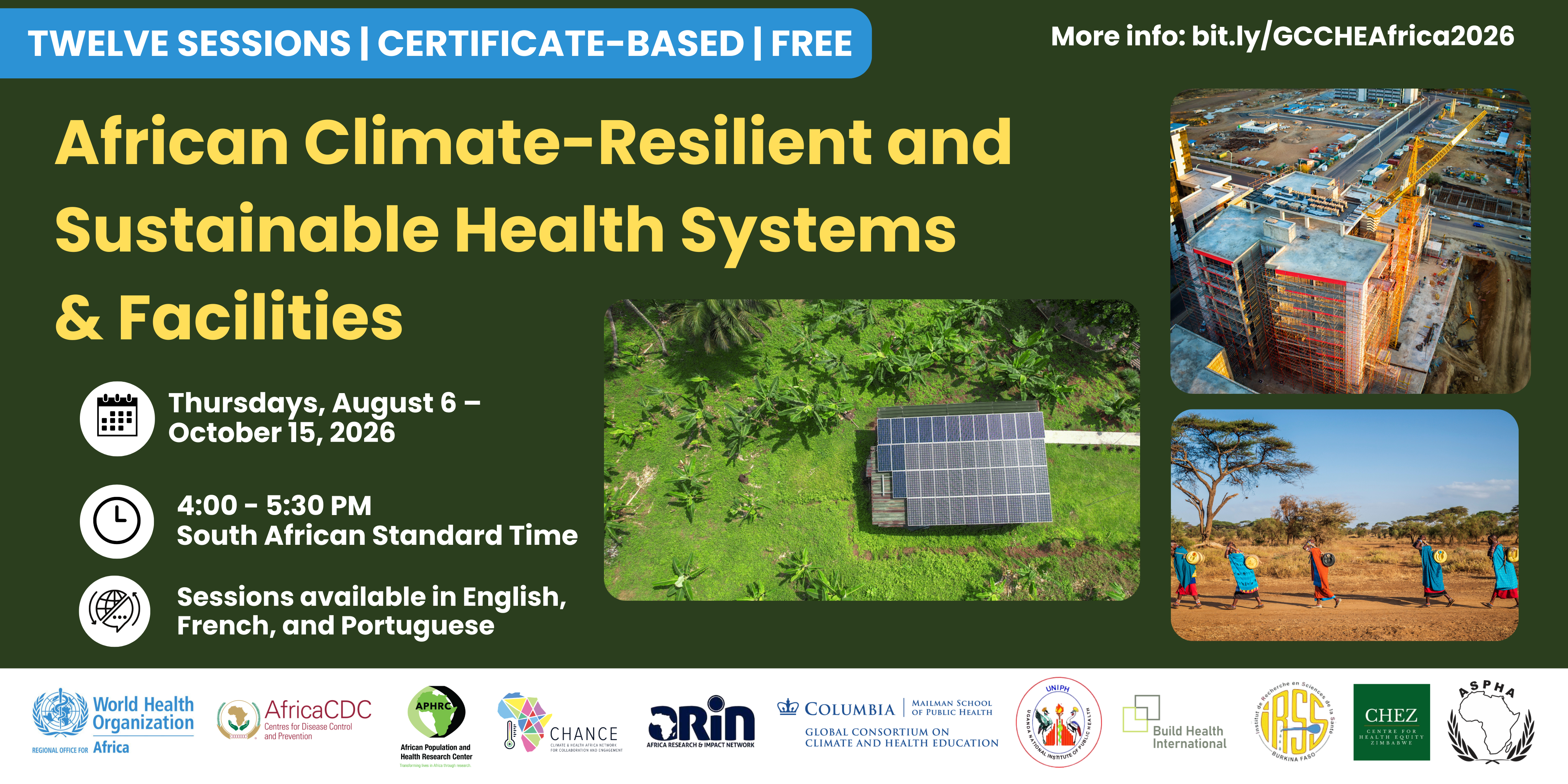
The African Climate-Resilient and Sustainable Health Systems & Facilities Course will equip participants with the knowledge and skills to assess health system vulnerabilities, integrate adaptation and mitigation into operations, measure and monitor resilience and sustainability, and implement strategies to green health facilities while maintaining continuity of care.
The course was developed through a partnership between the Global Consortium on Climate and Health Education (GCCHE), Association of Schools of Public Health in Africa (ASPHA), World Health Organization Regional Office for Africa (WHO AFRO), Africa Centres for Disease Control and Prevention (AFRICA CDC), Climate and Health Africa Network for Collaboration and Engagement (CHANCE), Uganda National Institute of Public Health, Africa Research and Impact Network, Aga Khan University, African Population and Health Research Center, Research Institute in Health Sciences, National Public Health Institute, University of Pretoria, University of Botswana, Building Health International.
The Course’s key goals are to:
- Communicate and Advocate for Climate-Health Action: Develop targeted communication and advocacy approaches to convey climate-related health risks and evidence-based solutions to policymakers, communities, and cross-sector partners.
- Prepare health professionals to assess Climate-Related health risks: Familiarize participants with leading frameworks to conduct vulnerability and adaptation (V&A) assessments for health systems and facilities.
- Strengthen climate resilience of diverse health facilities: Share adaptation strategies that strengthen health facility infrastructure, workforce capacity, service continuity, and emergency preparedness in the face of climate-related disruptions.
- Integrate Climate Resilience into Health Policy and Planning: Embed climate resilience principles into health system governance and strategic planning, ensuring alignment with national adaptation plans and sector-wide health strategies.
Course Structure
The course will consist of twelve weekly (every Thursday)) live-virtual 90-minute learning sessions targeted towards health professionals from all backgrounds. Each session will consist of 45 minutes of “theory/foundation” followed by local case studies from regional practitioners and tool demonstrations from subject-matter experts. There will be a live question and answer opportunity at the conclusion of each session. Resources such as frameworks and suggested readings will be provided to all course participants following each session. Video recordings will be available following each session for asynchronous view.
Register here for the course

